top of page


I will admit, when it comes to music, I have an overall urge to try everything, like a platter at boring parties or funky hats in vintage stores. Luckily sometimes, this leads to brilliant discoveries like the one and only, Kiki Kramer, who I fortunately had the opportunity to speak to leading up to her latest single (Thanks to our fantastic Editor-In-Chief, Mark). Her new song, Coal Hearts, is an upbeat dance track reminiscent of Gaga’s early work, bringing back the much-missed tones of glittery pop and defiant originality, Coal Hearts, touches upon Kiki’s attraction toward emotionally unavailable men through rich and symbolic imagery.


I haven't been able to stop listening to your song (Coal Hearts) since I heard it, it made me want to go back to the beginning of your discography, and as I suspected totally wonderful, so I'm wondering, What made you want to start making music and how has that influenced your style?

I technically wrote my first song in eighth grade for a school project, but back then it was all just for fun. I was way too embarrassed to ever take music seriously. Summer 2021, post-lockdown is really when it clicked for me. I met this girl at a party my roommate and I crashed. She was very gifted but had no idea. It was frustrating to see somebody so talented not doing anything about it, and then I realized that maybe I was being hypocritical. That sounds cocky. It’s just that singing has always been what I’m best at, so what was I doing pursuing a drama degree when I’m so much better at this other thing and also enjoy it ten times more? As for influences, I have a lot. There are two playlists up on my Spotify profile containing anybody who has ever inspired me. My top five are probably Marina and the Diamonds, Fiona Apple, Lana Del Rey, No Doubt, and Melanie Martinez.


A theme I found very interesting in your music, is the push and pull of the chase for love, along with the crash of it all, I guess my question is, how do you find yourself healing after love like that and how does it tie into the stories you then tell in your songwriting?

I used to carelessly throw myself at people who didn’t like me very much. I don’t think I was too into them either. I just needed their validation so badly I would’ve done anything for it. The problem escalated till I found myself involved with a very broken individual, lost half of my friends, and my living situation. So much of my music is about this situation. Songwriting is my outlet.


Your sound has a very indescribable energy to it that isn't heard much nowadays, how do you find yourself fitting into the industry despite breaking out of the norm?

I’m glad you think so. I’m still feeling out my sound. I have really bad ADHD and kind of just make whatever I want to make at the moment, hoping I’ll still like it in a couple of months. As for fitting into the industry, I don’t know yet. I’m very new to it and quite small. I have an aesthetic vision for my brand and an overall sound I’m trying to achieve. I’m just praying it all pans out.


A lot of artists find themselves struggling to continue not only after the pandemic, but also in the midst of growing up, and figuring out the world we live in, Where/when do you find yourself feeling the most creative and inspired?

The pandemic changed my life in a positive way. Lockdown happened and I realized my world looked the same. I never left my house anyways. I grew up fearful and slightly agoraphobic. Now I force myself to go out even when I don’t want to because those usually end up being the most fun nights. Making myself uncomfortable is kind of thrilling. It’s also what inspires me the most. All of my songs are born from the anxious thoughts I can’t seem to kill.


My final question is, How do you want people to feel when they hear your music?

I’m really just writing the kind of music I would want to listen to: something catchy with an edge to it. I want my music to make people feel high because that is what my favorite musicians do for me. It’s pretty subjective though, which is why making music is so terrifying. My treasure is bound to be somebody else’s trash. Music is the one artistic medium where every person has an opinion, whether or not they’re qualified. Too many pretentious bloggers out there with “good music taste” who are probably tone-deaf themselves.


Coal Hearts is out now, and available to stream on all platforms, along with the rest of her music! Kiki’s social media and the link to Coal Hearts is below!


Written and Interviewed by Toni Desiree

Photography by Mark Bluemle


Hello, 47Club!


This issue is stunning! We have truly beautiful articles by everyone involved and even more on the way! I've known I wanted to do a pride issue forever, and I'm so happy with how it turned out. Our issues just keep getting more clean, and I am so so so excited to create our next one.


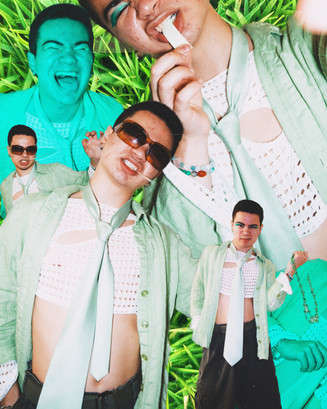
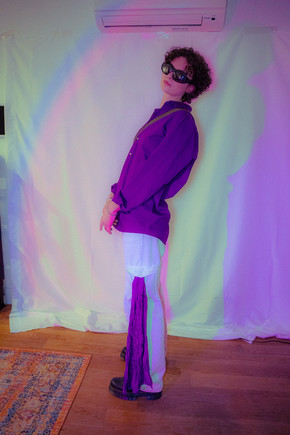
For this shoot, we wanted to capture each color of the rainbow. The main problem: how do we not make this look like a Target pride ad? And how do we not make this look... chugey.


We decided to go for a 90's zine editorial moment and I would say we did pretty well! The pictures were edited with warm tones and grains which enhanced the feel we were trying to go for. Jake and I also interviewed each model to give the shoot more personality.


I'll see you next month! Enjoy the shoot <3

ROYGBIV - The Issue 05 Shoot


RED - Melody Nguyen (She/Her)


How do you show pride?


"Coming from a traditional town and moving to New York City showed me how acceptance and diversity can completely change the atmosphere of a community. I show pride by continuously encouraging my friends around me to always be themselves and embrace what makes you different."


How can Pride Month inspire and encourage individuals who are struggling with their Pride?


"Pride Month is a time everyone, more than ever, can realize there’s an entire community that supports you for who you are. I personally am inspired and encouraged by my peers who stand for pride and see that it is ok to be part of the LGBTQ+ community and there’s nothing to be ashamed of. In fact, it’s something to be proud of."


Orange - Catalina Torress (She/Her)


How do you show pride?


"I show pride by being unapologetically myself, open, and accepting of everyone I meet. "


How can Pride Month inspire and encourage individuals who are struggling with their Pride?


"I think pride month can inspire and show individuals that being part of the LGBTQ+ community is something to be celebrated, embraced, and shared!"


Yellow - Ka'enaaloha Watson (She/Her)


How do you show pride?

"I show my pride by actively using my voice and my art, including fashion, acting, content creation, and film making to normalize the beautiful world of queerness. Being queer is beautiful, I show pride by being unapologetically myself in every space that I enter. I am all of my identities; native Hawaiian, a woman, and queer, I definitely make it known. As an actor and filmmaker, I choose to work on and create projects that highlight people of color and those in the lgbtq+ community. Supporting other queer individuals and artists specifically is one of the biggest ways that I and everyone can show their pride for being queer or support for queerness."


How can Pride Month inspire and encourage individuals who are struggling with their Pride?

"Pride month is a time for everyone of any sexual orientation and identity to be unapologetically who they are. It’s a time for self-expression, self-love, community building, and aloha. The queer community advocates for this all year, however a whole month dedicated to these ideals impacts many people's lives. Observing those who are comfortable in their skin gives others the confidence to follow in their footsteps. Pride is not just for big flashy clothing and parades (although very fun and an integral part), it centers around what is inside. It recognizes that everyone of every race, background, identity, and gender is loved and deserves love. Pride Month inspires those of every race, identity, and background. And while some may view Pride month as a time for only queer people, pride month has the extraordinary ability to inspire not only those in the queer community but everyone in the world."


Green - Jake Pranian (He/Him)


How do you show pride?


"I show pride by being proud of who I am every day. Not just as a queer person, but as an artist, performer, friend, lover, and as a human."


How can Pride Month inspire and encourage individuals who are struggling with their Pride?


"Pride is just one example for those who are questioning their sexual identity that regardless of who you love or how you like to express yourself, there will always be space for you in this community. You are loved unconditionally, and you can take as much time as you need to fully come to terms with what makes you feel comfortable."


Blue - Livia Hetes (She/They)


How do you show pride?


"I show pride by celebrating my own and others’ authenticity and individuality!"


How can Pride Month inspire and encourage individuals who are struggling with their Pride?


"Pride Month highlights a community that is so important to people who might be struggling with their sexual orientation or gender identity. Everything becomes easier when you have a support system."


Purple - Ady Karnacewicz (She/They)


How do you show pride?


"I show pride by surrounding myself with queer people that both make me feel safe and that I can look up to. Community is important for every type of person, but the queer community has a way of changing and saving lives by simply accepting people as they are."


How can Pride Month inspire and encourage individuals who are struggling with their Pride?


"Proper representation is one of the easiest and most important ways to make an individual feel seen. Seeing someone that dresses/acts/looks/lives their life in a similar way that you wish to makes anything feel possible. A lot of us come from places where our specific orientations were not reflected in any sense, so to see someone now publicly and unapologetically being themselves can give us the power to do the same."


Photographer: Mark Bluemle

Creative Director, Casting, Production Manager: Ka'enaaloha Watson

Production Assistant Jake Pranian

Photo Editing: Mark Bluemle and Ka'enaaloha Watson

Graphic Editing: Jake Pranian

MUA: Kindra Kirsh

Interviewed by Jake Pranian and Mark Bluemle

📍 47Magazine HQ


Murder, sexual assault, incest, and homosexuality. Taboo subjects in the 1970s, these acts and identities were celebrated in camp films such as The Rocky Horror Picture Show and Pink Flamingos. These films proudly displayed queerness in an era where homosexuality was anything but accepted. While revolutionary and successful among fringe audiences over 40 years ago, these films continue to have a cult following in the LGBTQ+ community.


What Actually is Camp?


Rocky Horror and the films by John Waters are frequently described as camp, yet the flexible usage of the descriptor in 2023 might make the meaning unclear. When I describe these films as camp, I mean it in the true, Susan Sontag sense of the word (not in the way Karlie Kloss infamously imagined it). As described in Sontag’s essay “Notes on Camp,” the word describes an ironic and theatrical expression of tackiness or distastefulness. It’s self aware, exaggerated, and intentionally misaligned with appropriate culture. The startling fashion and absurd politics of these midnight movies exemplify the concept of camp in a distinctly queer and rebellious way.


Midnight movies, which are cult classics made popular for being viewed in large groups at midnight, frequently feature queer characters and actors in drag. One of the most iconic examples of this is in The Rocky Horror Picture Show, featuring a “Sweet Transvestite” who alters the lives of a heterosexual couple (O’Brien).


The Rocky Horror Picture Show

Girl meets boy, boy proposes to girl, boy and girl get trapped in a sexually devious mansion owned by aliens… it’s a tale as old as time. While unsuccessful upon its release in 1975, The Rocky Horror Picture Show became incredibly successful within queer communities and its popularity has grown exponentially since the 70s. Many cities internationally still host live productions and frequent midnight screenings. It is considered to be a queer masterpiece, with no character idolized as highly as Frank-N-Furter (played by Tim Curry, not pictured). This “sweet transvestite” brings life to a beefier, blonder version of Frankenstein, Rocky, to be his new partner. With the accidental arrival of Brad and Janet (pictured in the center, Barry Bostwick and Susan Sarandon), things don’t go according to plan. Frank-N-Furter sleeps with both of them, kills the biker Eddie who interrupts the party, and is eventually murdered by alien siblings Riff Raff and Magenta (pictured on the left and right, Richard O’Brien and Patricia Quinn). Much of Frank-N-Furter’s behavior is unsympathetic, but Curry plays the role with a self-aware playfulness that guides the audience into a jovial and rebellious spirit.


The Early Works of John Waters

In the first act of John Waters’ Female Trouble, the character Aunt Ida (below on left, played by Edith Massey) cries, “The world of heterosexual is a sick and boring life!” Released in 1974, it is one of many films created by the filmmaker depicting the lives of the LGBTQ+ community as “filthy.” However, this presentation of filth is a source of pride for the odd characters within these worlds.


Before the charming PG-rated film Hairspray, filmmaker John Waters worked to bring disgusting campy filth to the movies. Working with a consistent cast of queer actors (spearheaded by drag queen Divine, pictured above in the center, who inspired the original Ursula design in The Little Mermaid), Waters made low-budget films that intersected queerness with socially unaccepted behavior. This is exemplified most clearly in Pink Flamingos from 1972 and Female Trouble. Divine stars in both, playing rebellious mothers who take pleasure in robbing, raping, murdering, and essentially any other immoral act imaginable. If it’s violent, sexual, and disgusting, her characters will take pleasure in doing them. Even the actor Divine ate real dog shit on the set of Pink Flamingos to prove that, “not only is she the filthiest person in the world, she’s also the filthiest actress in the world!” While the thought of watching a drag queen gag on dog poop doesn’t sound like traditional queer representation, LGBTQ+ audiences have created a huge cult following for these works.

(L to R, Divine, Mary Vivian Pearce, Mink Stole, David Lochary, John Waters, and Danny Mills on the set of Pink Flamingos)

1970s Queer Midnight Movies in the Modern Culture

Recognizing the political time these films were released and how the filmmakers have reflected on their work over the course of several decades is very relevant. Despite using outdated terms like transsexual and transvestite, members of the LGBTQ+ community including Lavene Cox (a transgender actress who played the role of Frank-N-Furter in 2016) still reveres Rocky Horror Picture Show as the meaning of these terms had a different context at the time of the film’s release in 1975. John Waters referenced regret in his 2010 memoirs, citing that his real-life fixation on Tex from the Manson murders and its influence on Female Trouble was insensitive. Divine and Tim Curry are cis male actors in drag. However, the nuances of their gender performance in these roles pose unique ideas about masculinity. The success all of these films found have been through fringe and alternative audiences. Divine says in Pink Flamingos, “I'm the filthiest person alive, that's who I am,” with pride.


This pride in devious acts was a form of rebellion against the openly homophobic culture of the era. Putting cannibalism and “lesbianism” in the same sentence describing Divine’s atrocities in Pink Flamingos emphasizes the absurdity of homophobia. Rocky’s heterosexual attraction towards Janet is treated with outrage and disgust similarly to how queer relationships would have been acknowledged in the 70s. These bold and exciting films paved the way for many LGBTQ+ films of the future, even if many of the LGBTQ+ characters of the 21st century don’t commit violent murders.


Written by Mary Leer


You reached the end! Make an account to get updated when new articles and interviews drop.

bottom of page