top of page


In 2022, the sensationalized relationship between actress Pamela Anderson and Mötley Crue’s Tommy Lee became a victim to the limited series biopic wave of television. The series focused on the stealing and leaking of their honeymoon sextape, with a highlighting of the man who did it (Seth Rogan) as well as its impacts on both Anderson and Lee (Lily James and Sebastian Stan, respectively). The show went on to receive high accolades, mainly from the lead performances. Rogen, Stan and James received Primetime Emmy Award nominations for their portrayals and the overall was nominated for “Outstanding Limited or Anthology Series.” 


The issue, however, is the fact that Pamela Anderson, main character of the true story being told, did not approve of the project.  Pam and Tommy was made without the permission or aid of Anderson in the slightest, which she confirmed in her own Netflix documentary in 2023’s Pamela, a Love Story


This regressive representation of Anderson as a sex symbol from the 1990’s is a direct reflection of the contents of the show, in which she, her body, and sexuality are exploited for the media once again without her consent entirely. Since the release of the show, Anderson has become a feminist icon of the mid 2020’s; she embraces a bare face at fashion and film events, she released a plant-based cookbook, and simply has a newfound agency for herself. She made her return to acting in the 2022 Broadway production of Chicago, and following the release of her documentary, Gia Coppola sent her the script for The Last Showgirl


From the director that brought us critical Tumblr text Palo Alto in 2013, Gia Coppola was the writer and director of this film. A common critique to this Coppola nepo-baby’s auteurism is her “style over substance” approach. Beautiful frames are composed to accompany a script that only seems to scratch the surface of what it could say. In the case of The Last Showgirl, Coppola interestingly keeps the edges of the frame blurry, with her subject being the only aspect in focus, typically in the center of the frame. Even when the narrative tries to tell us otherwise, the showgirl is always the center of attention from Coppola's gaze and the audience's perspective.  


 We are introduced to Anderson’s “showgirl” via an audition. She stands center stage, with a bright light illuminating her as she fumbles through her audition. Firstly, she lies about her age and it's obvious.  She quickly follows up with a clarification that she hasn’t “auditioned in a while.” It is an unfortunately perfect introduction to Anderson’s character, who we come to learn is Shelly. Before this audition, Shelly was still dancing with Le Razzle Dazzle, an old-fashioned Las Vegas showgirl neo-burlesque. Alongside Shelly are her younger counterparts: Jodie (Kiernan Shipka) and Mary-Anne (Brenda Song). Eddie, portrayed by Dave Bautista, is the owner and manager of Le Razzle Dazzle and has been for many years. We get inside to their entire dynamic when the girls and Eddie are all having lunch with Shelly, including Annette (Jamie Lee Curtis), who was a former Le Razzle Dazzle dancer and now works at the casino as a cocktail waitress. It’s immediately obvious that this way of life isn’t sustainable in the slightest, with Annete unable to retire and must continue attempting to sell her looks and body for a living, yet is losing hours to the younger servers in her establishment. Jodie still shows a youthful form of optimism for her future, promising to learn French with Shelly and retire in Las Vegas. 


It is at this lunch that Eddie breaks the news that the show is finishing in two weeks. Jodie and Mary-Anne begin to audition for raunchier and modern shows, and Shelly proves herself to be still stuck in the romantic fantasy of the past. Having been a showgirl with Le Razzle Dazzle for the last twenty to thirty years, she clings to her dreams of being a true dancer. She dreams of the ballet, and the vintage glitz and glamour of life that she was promised. However, Shelly pushes through, and in a time of doom, she has no one to face but herself, dressed and decorated to the max. 


This idealized version of her past self isn’t only prominent to her, but to her estranged daughter, Hannah (Billie Lourd), who visits Shelly to let her know that she is now graduating college with a degree in photography. When Hannah decides to watch the show and see exactly what life her mother chose to live over herself, she throws shame into the face of Shelly. We also see the slight mother-daughter dependency that Jodie has grown to have for Shelly falling apart, when Jodie realizes that the life she chose is not and will never be acceptable to her family and she is truly on her own.


All of the showgirls are, unfortunately. Shelly can’t get a date or fix the relationship with her daughter, Jodie is without her family, and Annette is on the verge of homelessness. This brutally honest display on the life of a performer is what makes the technical choices made by Coppola stand out. The times change and the spotlight moves to highlight the next big thing. The next beauty standard, the next thing that's considered hot. Sex is selling more and more, and Shelly refuses to grasp it. In addition to that, as the director tells her in the audition, the talents that Shelly may have displayed in her earlier career have no space in the current age of performance. 


However, what else is there for these women when the spotlight moves off of them? Are they meant to just continue to adapt to something outside their standards? Are they meant for a life of maltreatment by the industry that promised them stardom and dreams come true? The film also calls into question the audience’s participation in the sensationalizing of these women. By the rules of the camera, we are not allowed to see anything but these women. 


Although Pamela Anderson took agency of her own life, making her own documentary with her son and writing a cookbook about the new life she’s adapted, she still finds herself a victim of the nostalgic romanticism of who she once was, or presented as to the public. Becoming an actress was never in her path, and certainly the sex-symbol status was something out of her control. Her past remains something in the spotlight, with newer generations watching shows like Pam and Tommy and older generations having the image of her 90’s persona ingrained in their mind for something that was completely out of Anderson’s control.  The spotlight itself sits outside the hands of the stage, and the sad reality is that until it moves on to someone else, the show must go on in any way it can. 


Written by Ana Marks


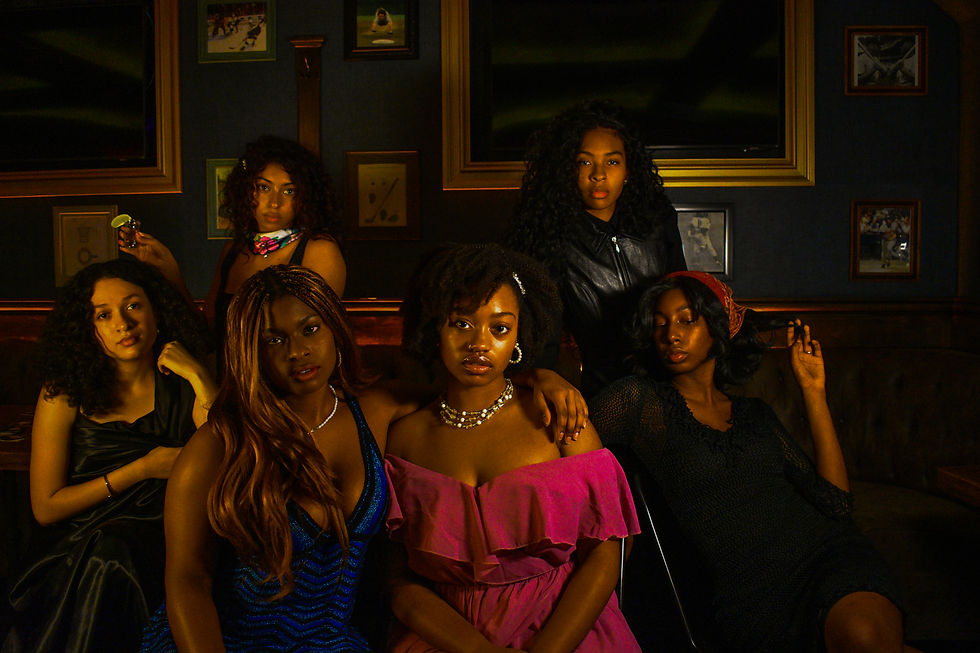
Black love is an unparalleled force, but it has historically not been spotlighted in mainstream media. The term appears to refer to solely romantic love, but it is much more than that. Black love encompasses love found within the community, love found within friends, and family, which is very important to notice. Black love has been a very divisive term on the internet in recent years, so recognizing its wide range of meanings is invaluable.


“Love Jones” is a 1997 rom-com starring Nia Long and Larenz Tate. This film follows the love life of a love scorn photographer Nina and a love-sick poet Darius. Throughout the film, romantic love is shown as an addictive substance that can change one’s life in an instant. In tandem with this platonic love is shown as this safe constant in their lives. The main couple goes through multiple ups and downs but eventually realizes they were meant to be after a long break.


Constantly throughout the film, they are falling black on to their friends on what to do next with their relationship. When Nina leaves Chicago because she is offered a new job opportunity in a different town, her friend Josie calls Darius to inform him of her departure at the train station. And when Darius decides to give up on love his friend Eddie is the one to convince him to keep fighting for it.


The way the black love story was created in “Love Jones” highlights a lot of the problems of dating now almost 30 years later. With the creation of dating apps and social media, it has made finding love more difficult. The expansion of options a dating app brings leads to the process becoming slightly monotonous. In the film Nina and Darius were only able to interact face to face so it made each interaction much more important. Without the addition of seeing each other's Instagram posts while they were apart, they were truly able to grow separately as individuals.


A lot of the troubles faced during “Love Jones” are the precursor to a modern black love story that is shown in the HBO series “Insecure”. The main character Issa deals with a tumultuous relationship with her love interest Lawrence. In their story, there are plenty of ‘will they, won’t they moments?’. But in the end, they reunite once more. A huge difference between their love story and Nina and Darius’s was the fact that their friend circles overlapped so they were still in each other's lives even when they weren’t together.


Both of these love stories intentionally or not subscribe to the ‘right person, wrong time’ mentality. Which can say a lot about the states of dating maturely vs immaturely. When looking into these relationships they both start to crumble the moment things begin to remain static. Causing Nina to choose a new job opportunity and for Issa to cheat. But with time and changing scenarios, the characters grow and develop more into the people they want to be, eventually leading their paths back to each other.


Both “Insecure” and especially “Love Jones” exemplify the importance of black love. Although their romantic lives were filled with turmoil, all the characters still had their friends by their sides. Both pieces of media depict black friendships that remain constant in their lives no matter what else is happening. And even with the troubles of their romantic lives, these characters also found black love within themselves. This inner love branches out into the community and really strengthens the foundations that created it.


Black love is about the people you surround yourself with now and who you choose to grow with or for.


Written by Clark Gérôme @clark_gerome

Creative Director: Tayja Whyte @tayjaa.x

Production Manager: Chloe Kaleah Stewart @chloe.kaleah

Photography: Roberto Meadows @_.rubbertoe

Production: Mickayla Davis @_mickayladavis_ | Jazzi Almestica @shes.so.dope | K Pereira @kaleb.pereira922

PA: Elena Richardson @elfrances

Models: Mickayla Davis @_mickayladavis_ & Kedma Moise @kedma_music | Melissa Alcindor @issaivvi & Lisa Thompson @Tram3ka | Jai LePrince @jai.leprince & Cecil Atkins @its._cecil

In the realm of independent filmmaking, few debuts captivate and linger as deeply as Sarah Lyons’ The Woods. Set against the backdrop of dense, shadowy forests, this psychological thriller unfolds a chilling narrative of mystery, memory, and haunting metaphors. In a candid conversation, Lyons, the creative force behind the film, shared insights about her journey from conception to execution, as well as the personal and practical elements that shaped her cinematic vision.


From Page to Screen

Lyons began crafting The Woods during her middle school years, revisiting the story repeatedly until it became the foundation for her directorial debut. “This was always the story I knew I’d tell first, whether in novel or film form,” Lyons explained. “It felt like something I needed to get out, almost like an inevitability.”

Growing up in a small, forested town of 2,000 people deeply influenced the setting. “The woods always felt alive, almost as if they were characters themselves,” she said. “Their presence was more than just physical—they had a spirit that demanded attention.” This connection with the natural world imbues the film with authenticity and an eerie vitality.


Practicalities and Artistic Choices

Beyond the symbolic, shooting in the woods also provided practical benefits. Lyons described how, as a first-time filmmaker, limiting locations was crucial to managing the budget. “The fewer locations, the better,” she noted. “It’s cheaper, but it also gives the film a contained, intimate feel.”

Despite potential weather challenges, the decision paid off. Lyons leaned on her familiarity with the environment to create an evocative, haunting atmosphere. The film’s visual style, a collaboration with director of photography Madalina Debaney, played a significant role. “Madalina and I discussed the aesthetics and mood for a long time,” Lyons said. “She has such an eye for framing and lighting, and she helped bring my vision to life.”

The use of drone shots, courtesy of Erica Rogers, added a distinctive edge. “Erica’s drone work captured the vastness and isolation of the woods,” Lyons explained. “Her editing skills brought cohesion to the final product.”


A Tale Told Through Light and Sound

Lyons’ attention to detail extended to the film’s contrasting environments. The cold, industrial podcast studio scenes featured sharp lines and muted tones, while the flashbacks in the woods were warm and fluid. “It was intentional,” she said. “The woods represent the organic, messy aspects of life, while the present is structured and sterile. That final shot in New York City merges both worlds.”

Sound design also played a pivotal role in building tension. Anastasia Goldberg, one of the onset sound workers, ensured clean on-set audio, while George Miata, a sound designer Lyons serendipitously discovered, crafted the film’s haunting soundscape. “The only real input I had was wanting the podcast audio to feel like a podcast and the rest of the film to feel cinematic,” she said.

Challenges and Serendipity

Lyons faced the dual challenge of maintaining her creative vision while navigating the unpredictability of filming in the wilderness. “Knowing exactly what I wanted beforehand was key,” she explained. “From color palettes to storyboards, I had to be prepared so the crew could stay focused.” One unexpected moment of serendipity occurred during the campfire scene. “It was scripted that the characters hear something, but during every take, an owl actually hooted at just the right moment,” Lyons shared with a laugh. “It was surreal like the owl was part of the cast!”


Looking Ahead

Lyons is already working on her next project, a folk horror crime thriller exploring cults in rural settings. Though details remain under wraps, she expressed excitement about continuing her collaboration with Debaney and Rogers.

When asked which character from The Woods she related to most, Lyons reflected deeply. “I think I see myself in all of them,” she said. “They’re like pieces of my brain—broken, sad, hopeful. None of them are truly villains; they’re just trying to navigate their own struggles.”


A Unified Vision

Ultimately, The Woods is as much a psychological exploration as it is a supernatural tale. The forest serves as a metaphor for memory, childhood, and the messiness of life. “It’s a space where the characters confront their fears and truths,” Lyons explained. “The woods aren’t just a setting—they’re the stage where everything unfolds.”

As Lyons continues her filmmaking journey, her passion for storytelling and dedication to her craft promise even greater accomplishments ahead. For audiences, The Woods is a testament to the power of independent cinema and a debut worth celebrating.


A Sense of Community on Set

Filming on location created an environment of unity among the cast and crew. Lyons described the setting: “The house we stayed in had a porch out back with views of mountains and trees. It was a beautiful place to reflect, especially during sunrises and sunsets, which

became part of the daily rhythm on set.”

This shared living space fostered a sense of camaraderie, with everyone spending downtime together. “We’d stop for the day, eat, play music, and watch TV. It created a warm, communal atmosphere that shines through in the final product,” Lyons explained.


Mental Health and Haunting Questions

A central theme of the film is the impact of untreated mental health issues, particularly how they manifest in close relationships. Lyons noted that Amy’s character was designed as someone deeply in tune with the world around her but overwhelmed by a lack of resources to navigate her sensitivity.

“You can interpret it as something supernatural haunting Amy or as untreated mental illness that her friends fail to address,” Lyons said. “I think both interpretations are valid and can exist simultaneously.”

The director emphasized that leaving some aspects open-ended allows the audience to grapple with these questions on their own terms. “Horror is a genre that thrives on asking big questions without necessarily answering them. That’s the beauty of it—it reflects the mysteries of life itself.”


Crafting Characters and Performances

Rehearsals played a crucial role in shaping the film’s emotional core. Lyons worked extensively with her actors to ensure they could dive into their roles once filming began. “We spent a lot of time building chemistry and exploring the characters’ backstories beforehand,” she explained.

Amy’s descent into darkness required a nuanced performance, and the actor delivered. Lyons praised her ability to embody the complexities of someone wrestling with inner demons and external pressures.


The Challenges of Indie Filmmaking

When asked about the most difficult scenes to film, Lyons highlighted the fight sequences between Amy and Kate. “Action scenes are technically demanding. You have to get precise angles, choreograph movements, and ensure safety while creating something visually cohesive. We wrapped that scene at 4 a.m., and the actors were exhausted after hours of rolling around in the dirt.”

Despite the challenges, the hard work paid off, with performances and cinematography receiving accolades. Lyons reflected on what she’d do differently with a bigger budget: “I’d extend certain scenes, explore flashbacks, and delve deeper into the mystery of the woods. But sometimes, constraints force you to be more creative, and that can lead to something special.”


Advice for Aspiring Filmmakers

Lyons offered practical advice for budding filmmakers, especially those interested in horror. “Write a screenplay you love because it’ll be your baby for years. Build a community of collaborators you trust. And if it’s your first film, keep it small—horror is a great genre for stretching a tight budget.”

She also encouraged filmmakers to study horror for its efficient storytelling. “You can do so much with shadows, sounds, and subtle scares. Even if you’re not making a horror movie, the lessons from this genre are invaluable.”


A Lasting Impression

For Lyons, the film is about more than just scares—it’s an exploration of memory, relationships, and the mysteries of life. “I wanted to show how our perceptions of people change over time, especially when trauma is involved. The ending reflects how memories can distort and how some questions are never truly answered.”

As Sarah Lyons continues promoting her film, her passion for storytelling and her reverence for the horror genre shine brightly. For aspiring filmmakers and horror enthusiasts alike, her journey is an inspiring reminder of the power of creativity and community.


Follow Sarah Lyons on Instagram for more updates on The Woods and for future projects.


Written by Chloe-Kaleah Stewart

Photos by Sarah Lyons


You reached the end! Make an account to get updated when new articles and interviews drop.

bottom of page