top of page

The RuPaul’s Drag Race All Stars 11 promo just dropped this past Wednesday, and it’s already shaping up to be a sickening season. We’re excited to see Mystique Summers, an OG queen who has left a permanent impression on the franchise, return for their first time in years. Veteran queens like Silky Nutmeg Ganache, Morgan McMichaels, A’keria C. Davenport, and Kennedy Davenport are coming back to All Stars with a vengeance and an opportunity to finally receive a crown. However, they are up against some heavy hitters, All-Star first-timers like Morphine Love Dion, Crystal Methyd, and Sam Star. With all this anticipation, you definitely do not want to miss the season of All Stars, which premieres on May 8th.  


18. Silky Nutmeg Ganache: 

The Reverend Doctor herself is back to compete for the crown for the fourth time. This two-time finalist and lip-sync assassin has proved why she is a massive threat for the crown. The crowning jewel of her look is the way she accessorized it with brass knuckles that read “rubirth” and “crunch,” the former referencing her recent weight loss and the latter referencing her iconic catch phrase “munch munch crunch crunch.” Unfortunately, the simplicity of her pink bodysuit does not allow her look to stand out as much as the other queens, therefore earning her last place on our list. 
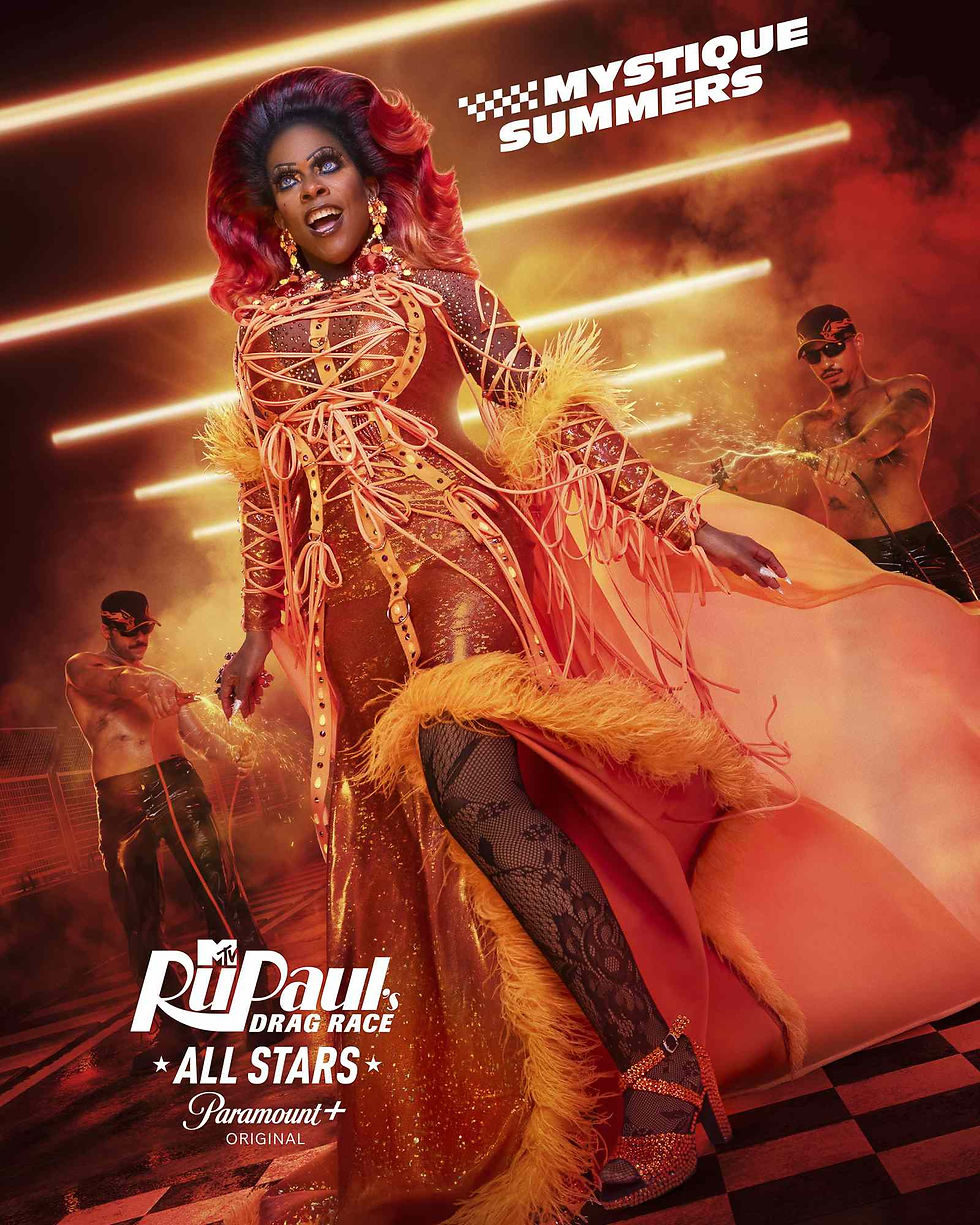


17. Mystique Summers:

Sixteen years after her first and only appearance on the show, Mystique Summers is back to snatch the crown. Mystique’s drag evolution is evident in her promo look, which showcases her elevated makeup skills and a wig that gradients from black to orange. However, the biggest gripe is the distraction caused by the strings going across her dress and the tie detailing, which is what caused her to place so low on our list.


16. Morgan McMichaels: With this being her third time competing on the show, will Morgan prove that the third time is the charm? This L.A. legend and recent Entertainer of the Year winner has proven that she is a major threat for the crown. The flame motif in her outfit was the perfect choice for the orange promo theme. We placed Morgan lower because the garment's material lacked a certain wow factor. 


15. Sam Star: With Sam returning so soon after her first season, in which she placed in the top four, we can only assume she is hungry for the crown. This drag daughter of All Stars 4 winner Trinity The Tuck always showcases the polish and glamour of pageant drag in her looks. The star motif throughout her outfit, a reference to her last name and her position as an all-star, was a standout factor of her look. However, the lack of purple in her dress is what kept her from placing higher on this list. 


14. Shuga Cain: After Shuga’s highly-disputed exit on Season 11, fans have been begging for her return, and that wish has finally been granted. Shuga’s dress design is simple, but her flair comes out with these dramatic ribbons that she has coming from her wrists and a fierce set of purple nails. 
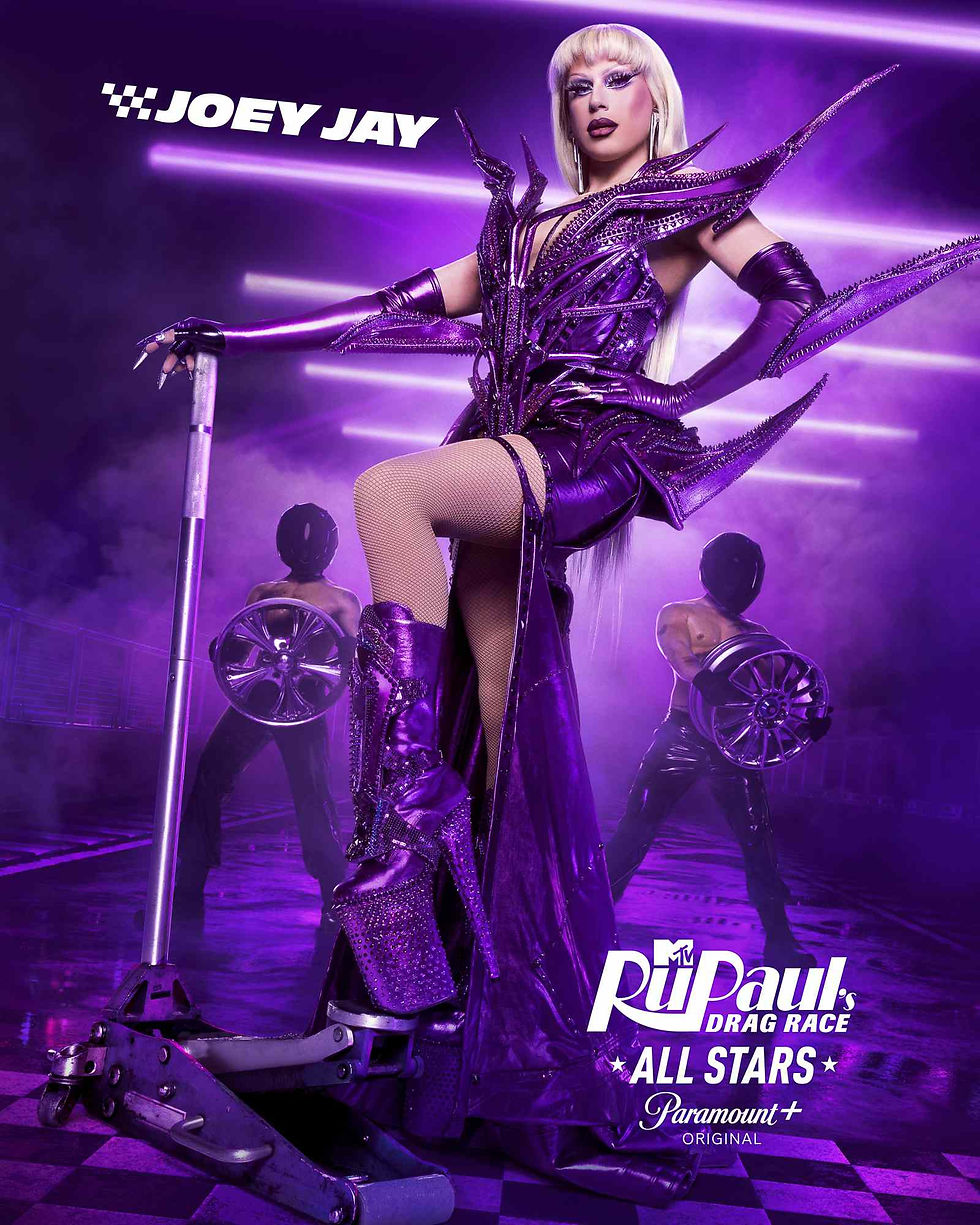


13. Joey Jay: This fan-favorite, meme-queen is back, and this time she’s wearing wigs. Upon going home in the ball challenge, Joey has developed a reputation for subpar looks. However, this structured promo look demonstrates promise with these sickening details of the spikes and these heels that were made for stomping on necks. However, her wig clashes with the garment, which caused her to place lower on our list.
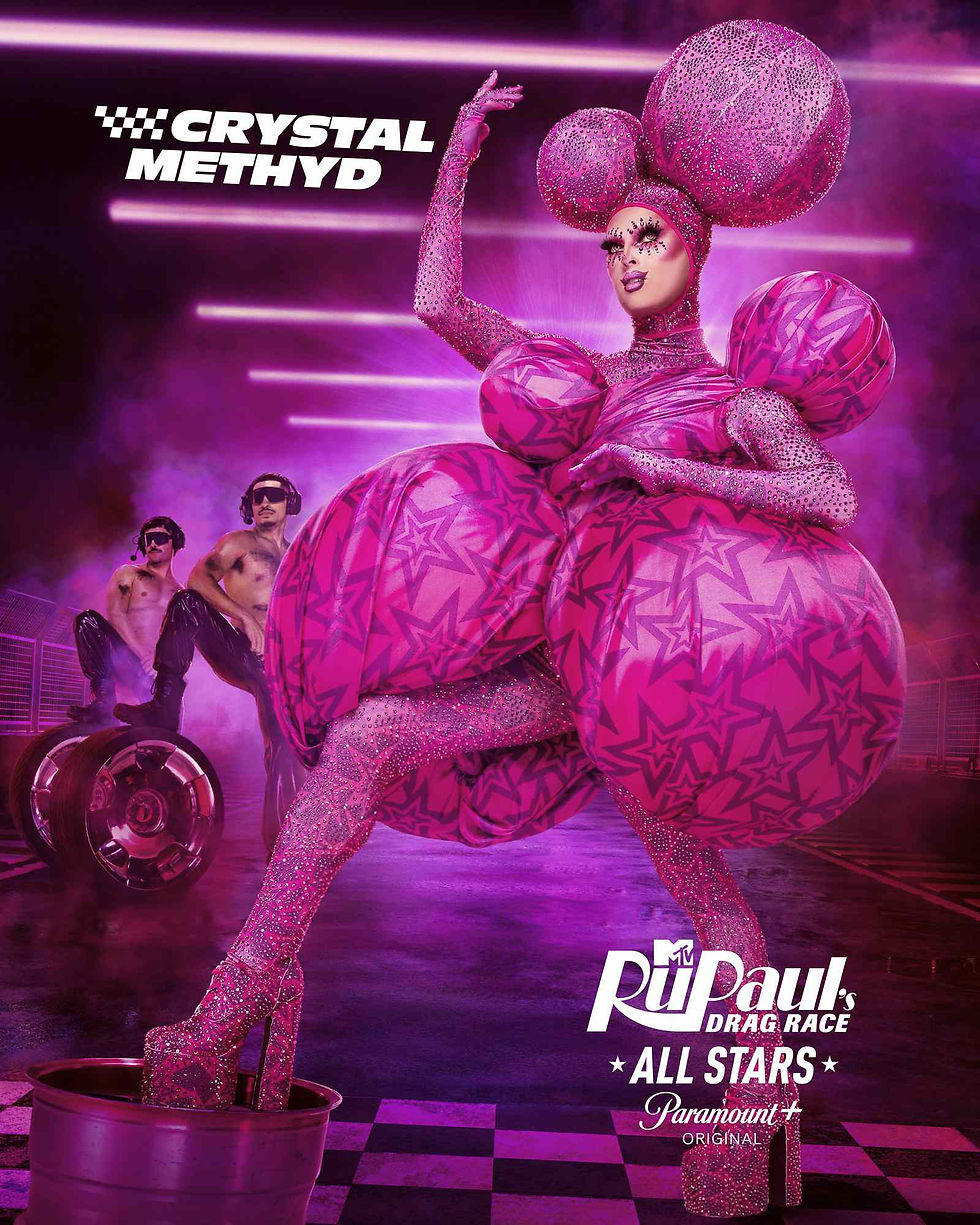


12. Crystal Methyd: Crystal’s conceptual clown perspective brought her all the way to the finale on Season 12. Now she’s back on All Stars, following in the footsteps of her drag sister Daya Betty, who was a finalist on the previous All Stars season. Her look is nothing short of pure camp, with a highlight of the garment being the star-covered fabric in reference to All-Stars. However, the unflattering shape of the outfit landed our season 12 queen in 12th place.


11. Jasmine Kennedie: Just outside of our top ten, we have Season 14’s Jasmine Kennedie. After coming out as a trans woman during the filming of her original season, Jasmine has blossomed into her true self, and now she’s back to compete for the crown. Her look is strong and sleek, with the highlights being the material, the cutout design, and the shoes. 


10. Hershii LiqCour Jete: The first queen in our top ten is Season 16’s first out, Hershii. Being the drag sister of the legendary Kornbread Jete, Hershii has big heels to fill and a shot at RUdemption. This chocolate bar diva came in hot with a fierce cape and bejeweled body suit that extended down her legs with a matching headpiece as a finishing touch. The outfit, being a leotard, pulled Hershii down from ranking any higher. 


9. Kennedy Davenport: The three-time finalist Kennedy Davenport is back on our screens for the fourth time and has proven time and time again that she is a major threat for the crown. The dancing diva of Texas is a drag legend and one of the biggest names on the cast. This promo look is incredibly opulent and reminiscent of Prince. It's fair to say this is her best promo look yet. 


8. April Carrion: During the Season 6 finale, April promised that she would be back for All Stars 2 to win the crown. Upon not being cast on All Stars 2, fans have been waiting for her return, and she’s finally back to compete for the crown. Her elevated mug and highly detailed bikini with multiple shades of pink stood out to us, earning her eighth on our list. 


7. Dawn: A fan favorite on Season 16, Dawn has been a highly anticipated queen to return to All Stars. With her promo look featuring a breast plate, her first time wearing one on the show, we can assume that Dawn has elevated her drag to the All Stars level, making her a top contender for the crown. Her high-concept tiger-print look, complete with elf ears and a tail, stood out to us, earning her seventh on our list. 
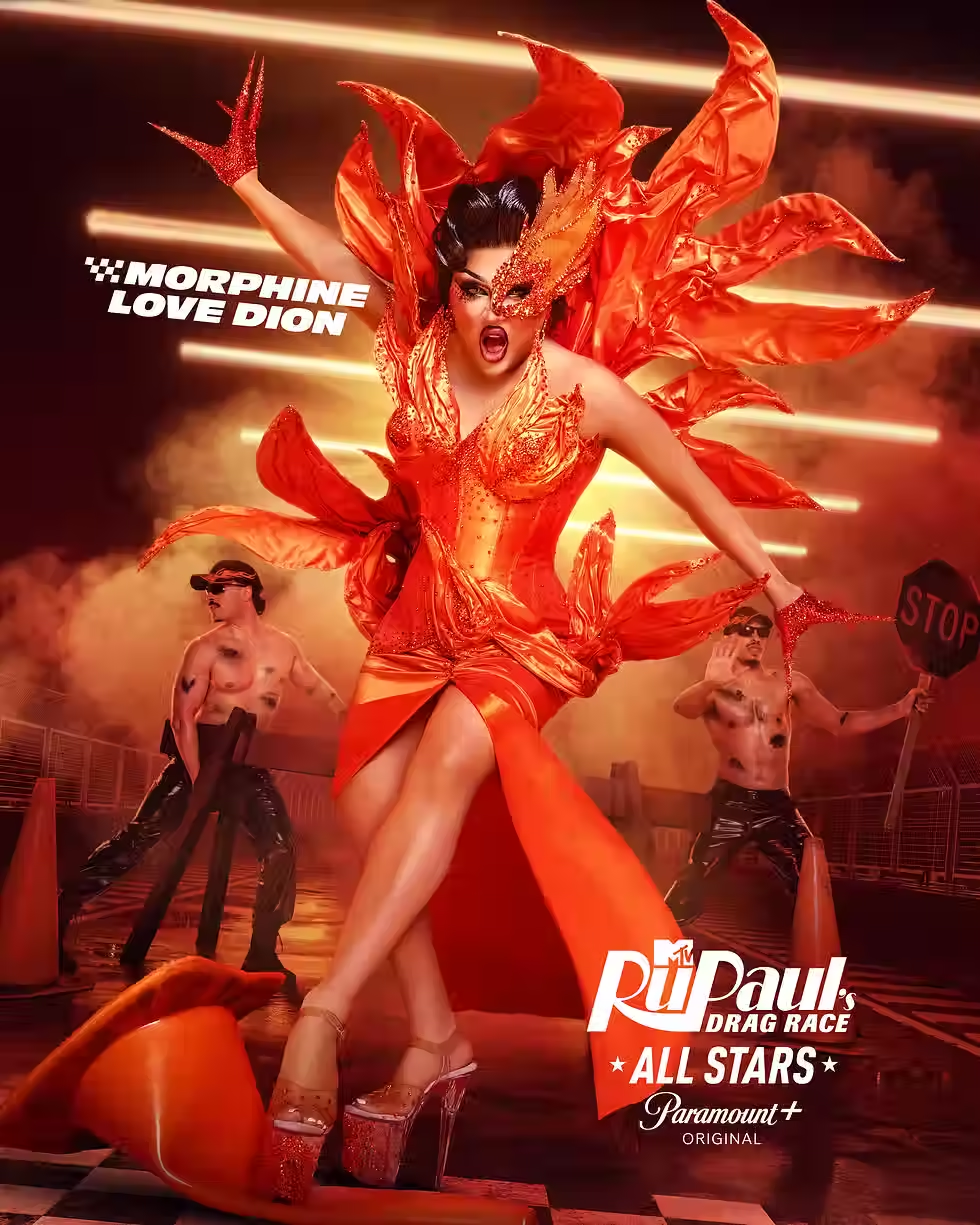


6. Morphine Love Dion: Deemed the Lipsync-Assassin of Season 16, Morphine has been a big name in drag since her season first aired. A consistent stand-out in Morphine’s looks is her makeup, which is always flawless. Fan her off because Morphine comes in hot, hot, hot, and ready with these flame details, with the shining piece being the flame mask. 


5. Vivacious: Twelve years after her first season aired, Drag Race legend Vivacious is finally back to compete for the crown. Vivacious is consistently referenced on the show for her iconic entrance look, and her promo look continues this trend as her headpiece is the elevated version of the headpiece she wore for said entrance look. Additionally, the pink trench coat is complete with a structural fanned back-piece. We appreciate her mix of drama and self-references, which earned her fifth on our list.


4. Aura Mayari: Known as “The Trade of the Season,” Aura consistently looks beautiful in and out of drag, and this look is no exception. She struts in with this warrior-inspired look, complete with a staff and crown, which stands out among the numerous gowns and bodysuits. The metallic gold and pink detailing is absolutely captivating. Her beautiful crescent moon headpiece is a great nod as she is the self-proclaimed “Filipina moon goddess.” 


3. Salina Estitties: On Season 15, Salina was known for her subpar looks and was even awarded the Golden Boot, an award for the worst look of the season. However, this promo look is an indication that she has stepped up her game. This gown, reminiscent of a quinceañera dress, stands out due to its ruffles and structural shoulders. The polish and elegance of this look has earned her third place on our list. 


2. A’Keria C Davenport: After two prior seasons, one of which she made top four, A’Keria has proven to be fierce competition for the crown. She absolutely stuns in this fabulous pageant gown, which she made herself. The drama and detailing of the look, accompanied by her always-perfect makeup and body, have earned her runner-up on our list. 
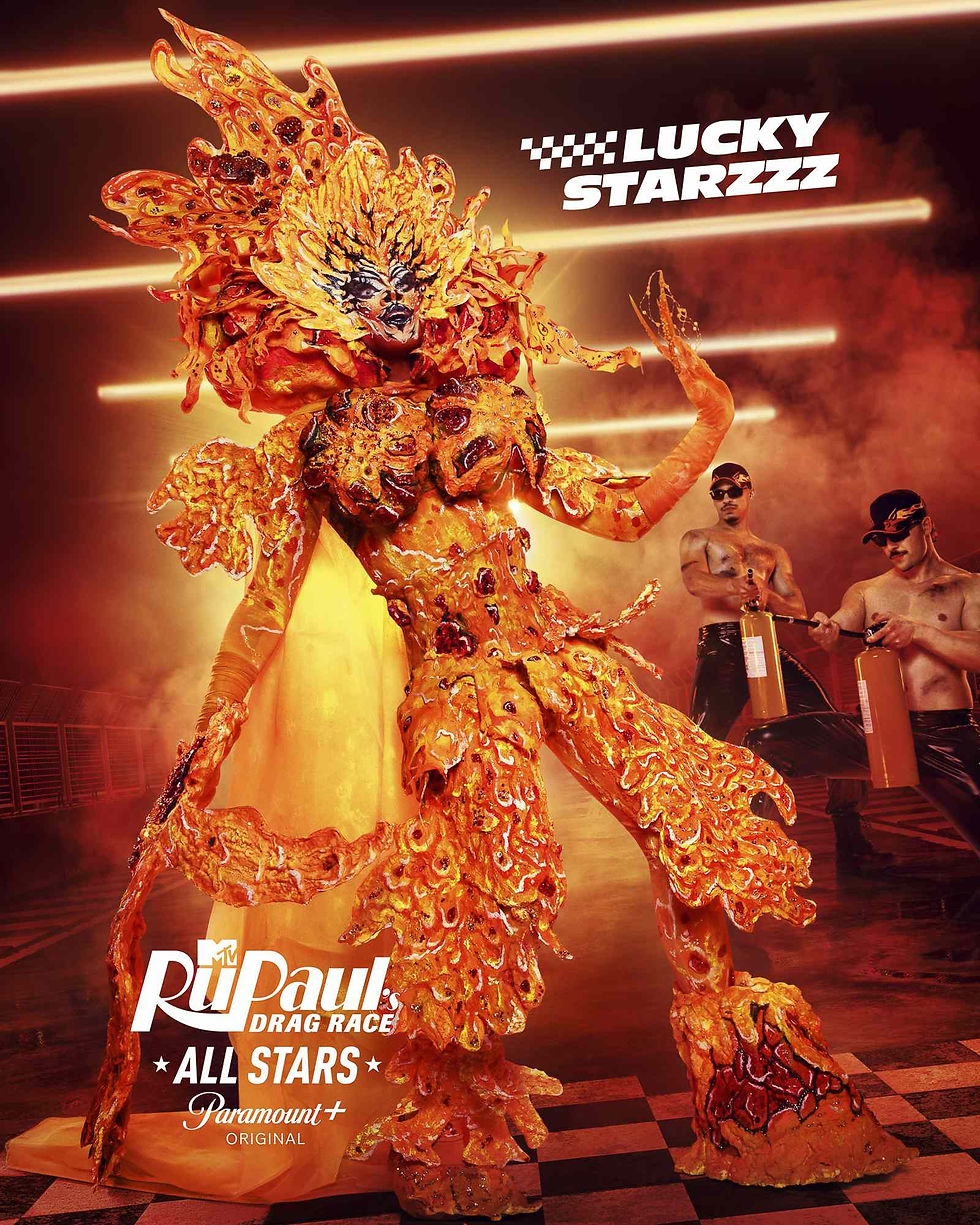


1. Lucky Starzzz: After Lucky Starzzz was eliminated first on Season 17, shocking the world, it’s no surprise that she was brought back to compete on All Stars so soon. Her high-concept, outside-the-box drag style is truly unique in the Drag Race world, making her one to watch out for. With her promo look, she took the orange theme and aimed for the stars and hit the sun. She earned the top spot because this conceptual and detailed look that reminds us of magma says everything about her and what she has to bring to the All Stars stage. Her makeup is the best out of all of the promo looks, and we just had to hand it to her, and it’s a big hand at that. 


All photos are sourced from World of Wonder and RuPaul's Drag Race All Stars Season 11. All credit and copyrights to World of Wonder Entertainment.


Article written and looks ranked by K. Pereira with Collin Killoran in association with 47Magazine.


To be fair, optimization under patriarchy is exhausting.

Last October, Vogue put out its ever-relevant “Is Having a Boyfriend Embarrassing Now?” article, which made the rounds on practically every media site that exists. CNN interviewed the author, The Guardian did a follow-up article, and every short-form and long-form content creator gave their two cents and then an extra penny. Most reactions correctly assessed the magnitude of how women’s dating history and romantic decisions impact their social status, and to a greater extent than for men.


Women being cognizant of this fact, especially with social media making the struggles of dating amidst blatant misogyny and patriarchal double standards painfully aware, have developed heightened vigilance regarding their choice of partners that they choose to associate themselves with publicly. Any failing in a woman’s partner that a hypothetical audience online notices before she does is beyond mortifying. With the help of TikTok’s Stitches and YouTube’s clips and Twitter’s quote tweets, the woman associated with some relational humiliation is forever branded as yet another case study in why dating men today is a humiliating experience. 


Or embarrassing, as one would say.


The result of this shift is people consuming content that teaches viewers how to minimize such dating “losses” in the quest for love. What this looks like for content particularly geared towards women is a positive feedback loop established between emotional hypervigilance about potential disillusionment and… interesting dating tips.


Yet, these dating pointers are far from harmless, especially for young and impressionable audiences looking to older figures on social media for advice. The loudest guidance about attracting, attaining, and maintaining a high-value man often recreates traditional purity culture, which is and has always historically been enshrined in patriarchy and misogyny. The founding principles of purity culture assert that women’s value in relationships comes from maintaining their purity through virginity, much of which is echoed in social media posts discouraging casual dating and physical intimacy. However, purity culture takes on a revitalized, “feminist” disguise, claiming to want the best for women, and doing nothing to dismantle the idea that a woman’s status is elevated by acquiring a partner. This modified version, which is prominent in many women’s dating advice accounts, promotes refraining from engaging in casual dating and/or physical intimacy in order to “not give” anything to a man, i.e., sex, without “getting” something in return, which typically may be money, gifts, or commitment. Not only does this lead women to suppress their natural desires for sex, but it also teaches women that expressing and executing said desires are mainly for men’s gratification, and especially at their detriment, given how physical intimacy is also framed as an act that is “done to” or “takes” from a woman.


Love can’t be earned with “purity” as if the love of your life would judge you for wanting to have sex with them.


We aren’t misguided for recognizing that men’s priority in the history of men being women’s partners was rarely about being good life companions. Joking about men being selfish or emotionally unavailable, immature or narcissistic or unreliable or inconsistent or defensive or controlling, or inconsiderate is consoling, especially when our dating lives seem to have more downs than ups.


All that kind of consoling does is reinforce the perception that disappointment while dating men is to be expected. 


But expecting disappointment doesn’t save us from disappointment; it just saves us from feeling disappointed. You can’t be disappointed if you have no expectations, right? 


Where does that leave us with love and romance?


Falling in love is too beautiful a thing not to experience because of hopeless pessimism. The fact that love is present in every art form since the dawn of time means that it exists, and the fact that people across time have enjoyed every art form’s expression of love means that the kind of love we all want is attainable. The kind of love that makes us feel seen and heard without judgment. The kind of love where we feel understood in ways we can’t verbalize. The kind of love that is persistent and perseveres through all the hardships that life has to offer during our short time here.


If you have a male partner who can’t, or won’t, give you the love that you want, and you keep him around nonetheless, you’re the embarrassing one. Life can only give you as far as you wish to dream. If you barely dare to dream as good as a partner who isn’t thoughtful, but he only gives you the ick biweekly, why would you deserve a partner from the stuff of romcoms? Clearly, you’re fine with less.

You’re only as embarrassing as what you accept. 

And desperate mediocrity has never been romantic or sexy.


Camaraderie has been an enduring element in female friendships throughout history. Whether in medieval convents or as newly working women in the past century, sisterhood and female solidarity have helped women fight against all kinds of bigotry, or at the very least, make persisting through it just a little more tolerable.

Women have typically been underdeveloped, if at all developed, characters. For the longest time, entertainment media in particular have represented the interactions between women and the relationships women have in their lives as unexplored territory at best and wholly inaccurate at worst. Female characters have primarily existed to support the often-male leading characters’ motivations and journeys, or as foils to enhance their “aura”. Disney’s early films portrayed women, even their princess protagonists, as passive maidens. Video games don’t operate much differently, like the ubiquitous Mario franchise, which has kept Princess Peach’s physical autonomy in a questionable state for most of the franchise’s existence, with her primary role having been as Bowser’s hostage that Mario must rescue over and over. Misrepresentation of women worsens with nonwhite female characters. Even if white heroines do get a chance at being at or near the foreground, albeit rudimentarily at times, the portrayals of nonwhite female characters are bastardized with shoddy stereotypes, such as black and brown women being depicted as unduly desexualized and undesirable or Asian women shown as overly submissive. 

With mainly male writing rooms and casting directors and editors and directors, where are women, and especially impressionable girls, supposed to find their stories on the big screen?


The 2000s and early 2010s saw a host of female-centered, primarily animated media in response to young girls consuming more digital media just like everyone else, with popular selections like the Barbie film franchise, the Monster High media franchise, the Winx Club series, and the Bratz series coloring my childhood. Such productions often included a mix of original and revamped content, with the latter in large part done by the Barbie film franchise, whose early works featured remakes of existing works like the Brothers Grimm’s Rapunzel or Alexandre Dumas’ Three Musketeers or Tchaikovsky’s Swan Lake ballet. Even these remakes were a first for women-centered media. Now, women were at the forefront of stories and fantasies involving them. 


No, these stories didn’t just involve them; these stories were theirs. Women were the main characters in every possible way. They were active players in their stories with the most interesting backstories and the best supporting cast. Men were frequently relegated to the background, with their most significant role being as supportive love interests. Notably, the men in these productions were never dehumanized, and the most underdevelopment their characters may have seen was in terms of… computer-generated motion graphics. Characters’ relationships, whether platonic or romantic, were not going to be ignored. The respectful yet flattering attention of male characters could be appreciated—and sometimes even reciprocated—by female protagonists, who also didn’t slow down to save their kingdom from evil sorcerers.


Depictions of female friendships were realistic: women could disagree, argue, and fight, even as part of the plot or conflict in an episode. But sisterhood was never abandoned. Women were rarely pitted against each other unfairly, especially over a man, as most male-dominated media may characterize female connections and bonds.


The target audience—Gen Z and younger millennials—has now grown up, but pop culture has maintained the relevance of popular women-oriented media. Nicki Minaj, despite having since fallen from grace, paid homage to Barbie’s brand with lyrical references and prominently pink stylistic choices, so much so that her fanbase calls themselves “the Barbz”. Zara Larsson’s rebrand mirrors the design of the Winx Club protagonists, with neon pop colors and glitter galore. Bratz’s impact on women of color cannot be sidelined with the main cast being overwhelmingly nonwhite, challenging the European beauty standards that even Barbie upheld to some extent. Gen Z and younger millennials have now been able to use the styles of the beloved characters from the films and TV shows from their childhood to inform their own aesthetic choices in how they dress and present themselves, especially when they want to make a statement. It is media like these that gave women, whether as young girls or evolving teenagers, a space to healthily engage with topics like beauty and fashion and life, without thematically being too “adult”.


Stories about women and with women in leading roles don’t always need to be about institutional sexism and omnipresent misogyny with dramatic monologues on the seemingly inescapable nature of firmly established patriarchy. Those stories are undoubtedly important, and we need them too. Awareness is a necessary first step to having the intellectual tools for women’s liberation from any and all oppressive structures. 

But sometimes, women, and especially impressionable girls, need to be able to see themselves as fairies and princesses and adolescent magazine editors, and everything in between. 

Fantasy is a means by which we can conceptualize our dreams and desires through imagination. In order to do, we need to be able to think. And without imagination, thinking doesn’t extend much too far. It may be an idealist perspective, but if there were no idealists, I certainly wouldn’t be a literate college student writing and drinking Moscato I bought with money I earned, with no one’s permission but myself.

You reached the end! Make an account to get updated when new articles and interviews drop.

bottom of page