- Yusef Shah

- Feb 9, 2023
A collection of images shot and edited by Yusef Shah.
A collection of images shot and edited by Yusef Shah.

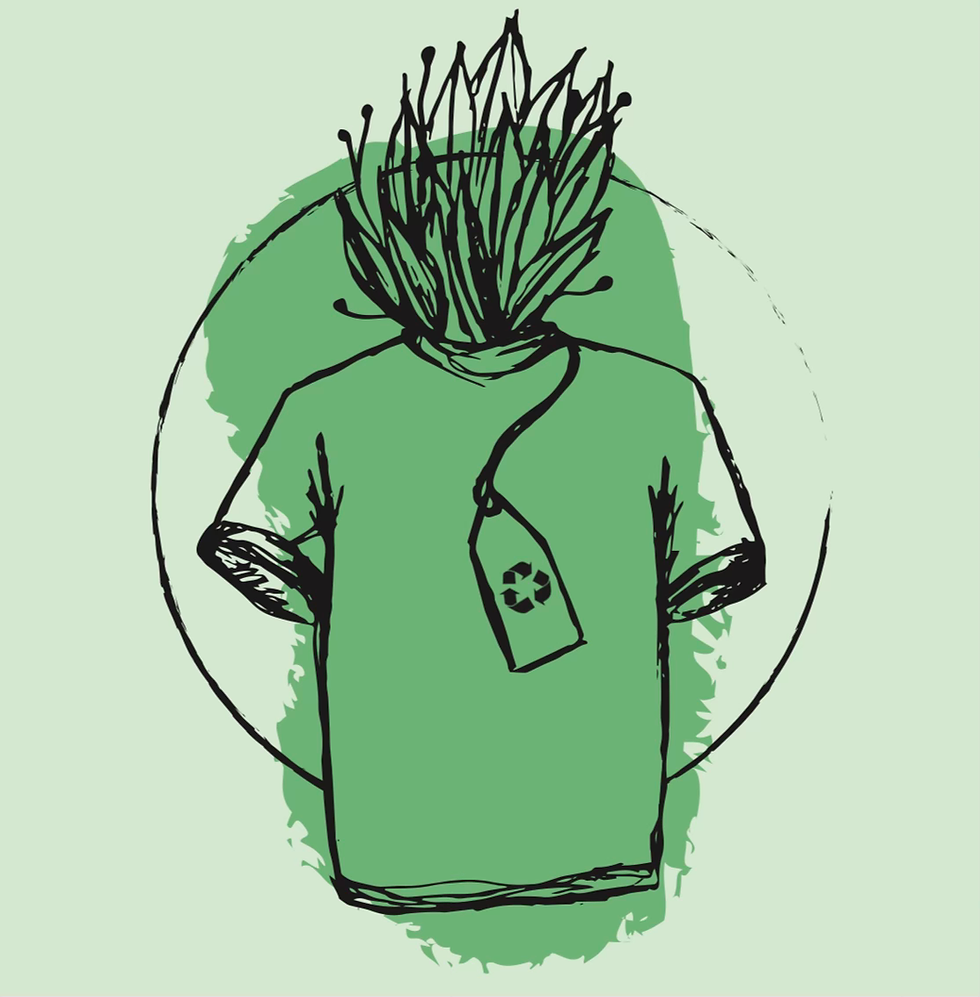
Over recent years, the fashion industry's environmental impact has become increasingly well-known to consumers. Some people may be aware that a large portion of the waste comes from fast fashion companies. Companies produce clothes in exorbitant quantities, very quickly, and sell them for cheap prices. Their business models rely on cheap materials and cheap labor, both of which are often sourced from places that put their employees in deplorable conditions, for even more deplorable wages. The “fast” in fast fashion refers to the speed at which new collections and trends are released. With the use of social media such as Tik Tok and Instagram, trends go in and out within the span of a few weeks. To keep up with those trends, these companies need to release new garments at the same time. Once those trends pass as quickly as they came, there is no longer any interest, those garments still exist, and they pile up.
The most daunting thing to the everyday consumer is trying to figure out what they could do to combat this environmental issue. It’s quite simple, the most sustainable clothing is the clothing you already have. Be it high-end or low-end, fast or slow fashion, clothing is more sustainable when it is not thrown away before the end of its lifetime. Of course, the maintenance of one’s clothing must be coupled with the prevention of overconsumption. In part, this requires a consumer to not fall into many micro-trends, which often last a month or so, as they become obscure and much harder to repurpose. If you were to buy everything you saw, the chances of that garment living through its lifetime become slimmer and slimmer.
Even if that article of clothing goes out of style, there’s no need to throw it away. Clothing can easily be altered or repurposed; cropping, hemming, or completely up-cycling are all options that should be sought after before just tossing it out. Extending the life of clothing can prevent both overconsumption as well as the pile-up of waste. The idea of renewing a garment’s purpose over and over to prevent waste is known as the “Closed Loop” cycle. On a much higher scale, this cycle requires that thought is put into each stage of a garment’s production, from where the materials are sourced to where the product is being made and eventually to whom it will be sold. When that thought is put in, the clothing is higher quality, and lasts much, much longer, thus making it a more desirable product to consumers.
Before the time of fast fashion, the cycle of trends and styles was determined by the seasonal releases of collections by fashion houses. Trends came about much slower and stuck around for much longer. Instead of impulsive shopping sprees, consumers would buy clothing with specific purposes in their minds, and that is what their wardrobe would consist of. Once that was completed, it would be worn for as long as it could be worn. The clothing wouldn’t go out of style, it wouldn’t be replaced by the newest, shiniest thing in a matter of weeks. The quality of the garment held up, too, lasting for many years. Part of our inability to shop like this today is the ever-changing micro-trends, which are often pieces without longevity, in the physical or aesthetic sense. The material usually used doesn’t last over a few years, and the styles are generally non-transferrable to other trends, making it difficult to hold on to for a long time.
Overall, the best way to prevent our overconsumption, which in turn helps with the mass production of fast fashion, is to put thought behind what you are buying. Do you really need this garment? When will you wear it? How many times? Putting thought into how to extend the lifetime of the clothing. Putting thought into the purpose of a new garment. Buying items that you don’t believe will become a staple in your wardrobe only adds to the eventual waste. It may seem small and ineffective at the moment, but eventually, it’ll pile up and make a difference.
Written by Gabbi Feaster
Graphic by Chloe Amen

Updated: Feb 8, 2023
Denim won’t die.
With the start of a new year means quite literally new trends. Whether that be colors, silhouettes, or accessories. With 2022 we saw the rise of avant-garde denim, meaning an everyday fashion staple was reborn into the high fashion world. When I say denim won’t die I mean this with such hope. No doubt denim has been around for centuries but it’s never been taken to such a unique level of architecture and imagination.
The concept of layering has always been familiar with fashion but recently denim has played such a significant part in street style and self-expression. Brands from Diesel to Levis have made denim accessible to anyone and everyone, whether that be in thrift or retail stores. We’ve seen independent and local designers based in New York and on social media platforms inspire and reinforce denim into an effortless outlet of innovation. They’ve proven that just because high fashion has modernized denim doesn’t mean this trend is reserved for the rich. Thrift stores hold all the potential to attain this trend; various sizes, tones of denim, and styles of denim. Making it possible for Denim to be repurposed in ways that can be done at home by oneself.
Trends to focus on coming up for this fashion week would be two-toned, statement, colored, and monochromatic denim. Brands to be looking at are Acne Studios, MM6, Private Policy, and always Dion Lee just to name a few. To conclude fashion at the end of the day is really an expression and a creative outlet, there’s not a correct way to approach it so my advice would be to have fun and find the balance between comfort and confidence.
Photography by Frank McHugh
Written by Frank McHugh